
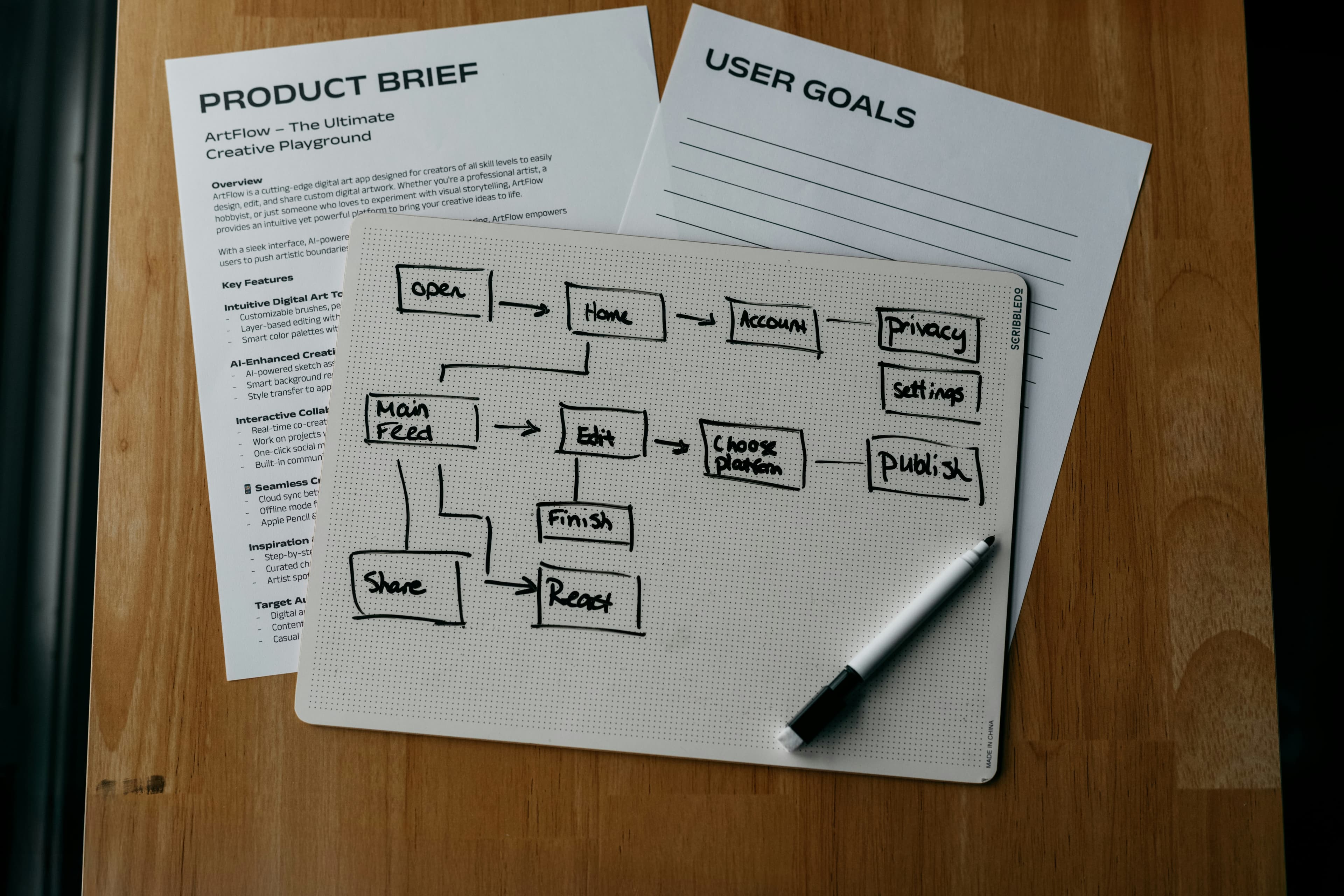
BinaryQuest’s MVP Sprint Framework: From Business Idea to Working Product in 8 Weeks
Introduction
One of the biggest challenges in software development is building products that do not match real user needs. Many projects fail not because of poor technology, but because teams spend months building features without validating the idea early enough.
BinaryQuest solves this problem with a sprint-based MVP development framework that focuses on speed, validation, and continuous feedback. Instead of long planning cycles and heavy documentation, we deliver working products in weeks—not months.
What BinaryQuest Software Services Cover
Our development capabilities are designed to support startups, enterprises, and growing businesses across different stages of digital transformation.
Core Services
- MVP development (idea to working product in 8–12 weeks)
- Odoo custom module development and API integrations
- Mobile application development (Android & iOS using React Native / Flutter)
- Offshore dedicated development teams (monthly engagement model)
- Legacy system modernization and API-first architecture redesign
The MVP Sprint Philosophy
BinaryQuest’s MVP framework is built on a simple principle:
The fastest way to build the right product is to first build something small, testable, and real.
Instead of guessing requirements, we focus on validating assumptions early through structured discovery and rapid prototyping.
This approach helps reduce risk, save development costs, and ensure that the final product aligns with real user needs.
MVP Sprint Framework (8-Week Model)
Our development process is divided into structured stages that ensure clarity, speed, and continuous validation.
🚀 MVP Development Stages
| Stage | Name | Description |
|---|---|---|
| 1 | Discovery Sprint | Understand business goals, user needs, and identify key risks |
| 2 | Product Mapping | Define user journeys and minimum feature set |
| 3 | Prototype Design | Create clickable prototype or early UI/UX model |
| 4 | Core Development | Build the working MVP with essential features |
| 5 | Integration Phase | Connect APIs, databases, and third-party services |
| 6 | Testing & Feedback | Real user testing and iterative improvements |
| 7 | Deployment | Launch MVP for live users |
Why This Approach Works
Traditional software development often fails due to late-stage discovery of problems. BinaryQuest’s MVP framework eliminates this risk by:
- Focusing on early validation instead of assumptions
- Delivering a working product instead of documentation
- Enabling real user feedback from day one
- Reducing wasted development effort
- Improving time-to-market significantly
Types of Products Built Using This Framework
BinaryQuest has used this methodology to build a wide range of successful products, including:
- Hospital management systems
- School ERP platforms
- Custom Odoo modules for large distributors
- Business automation tools for SMEs
- Mobile and web-based enterprise applications
Each product starts as a validated MVP and evolves based on real user needs.
Technology Capabilities
Our MVP sprint framework is supported by a strong technical foundation:
- Odoo ERP customization and module development
- REST and GraphQL API integration
- Mobile apps using Flutter and React Native
- Cloud-native architecture for scalability
- Legacy system modernization and migration
Business Impact
Organizations using BinaryQuest’s MVP framework typically benefit from:
- Faster product launch (weeks instead of months)
- Reduced development risk
- Lower cost of experimentation
- Higher product-market fit
- Continuous improvement based on real users
- Scalable architecture from day one
Conclusion
BinaryQuest’s MVP Sprint Framework is designed to help businesses move from idea to execution quickly and safely. By focusing on validation, speed, and real user feedback, we ensure that every product built has a strong foundation for long-term success.
Instead of spending months guessing what users want, businesses can start testing real products in weeks—and let the market guide the next steps.